Last winter, GLOBR featured the Bird Buddy, a bird feeder equipped with a camera and AI technology to identify birds and make birding more accessible. This feeder has a great amount of potential to make nature more appealing for all, in turn creating a world that is more connected. So how does it work, and what could it’s potential actually be? After a few months of testing out a Bird Buddy, these are all the ups and downs of my experience thus far with the world’s smartest bird feeder.
Bird Buddy originally started on Kickstarter, a crowdfunding website designed to “kickstart” companies and ideas into existence. That’s where I originally discovered Bird Buddy two years ago, back then just a small group of people seeking support for a brand new idea. I remember becoming enamored with the idea of being able to study birds in my neighborhood like never before, already imagining places to put the feeder to maximize the amount of visitors.
Today, Bird Buddy has over 100,000 units around the world collecting pictures of countless birds, and that number is growing quickly. Their mobile app sends a notification each time a visitor comes by to snack, creating a “postcard” that is stowed away for the future.

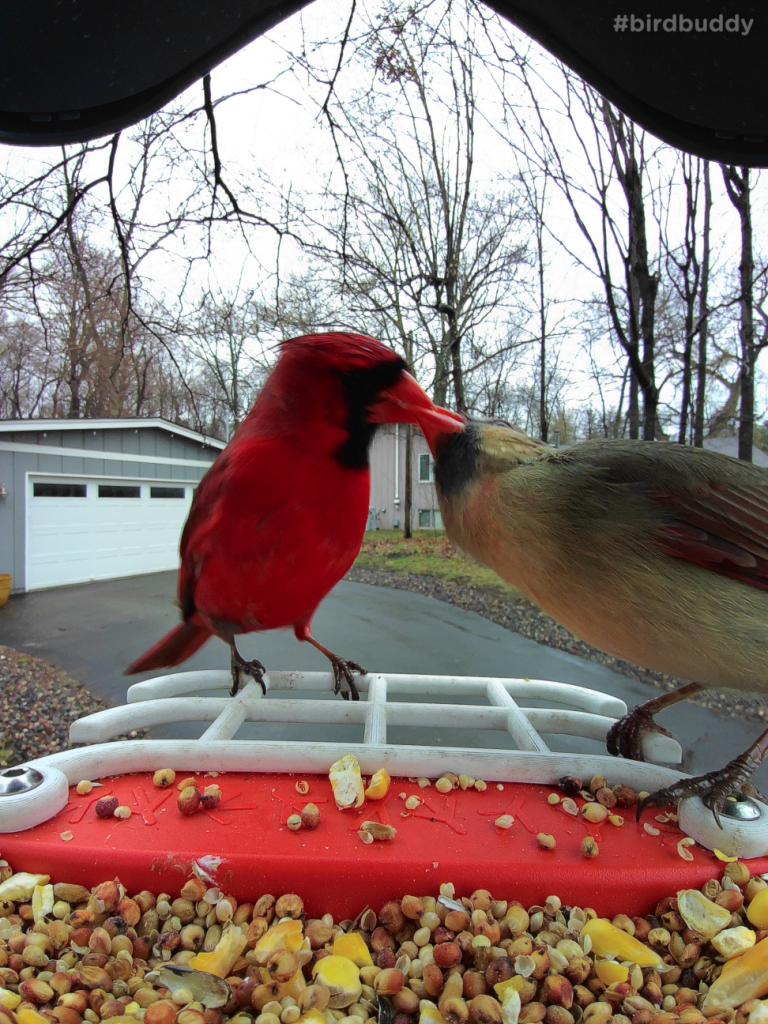
The Bird Buddy is a tool that I have realized can be utilized for more robust environmental education. Education about our planet is already important, but with the natural environment changing at a rapid pace, it’s important for everyone to learn how to protect and preserve our surroundings for the future. With the Bird Buddy’s app working in tandem with the feeder, learners are able to research and dive deep into the world of birds and their habitat. For example, did you know that the Northern Cardinal weighs about as much as a fork? This information and much more can be found within the app once you “collect” your first bird.
There are a few things that I feel are missing from the app at this point in its development. Notably, the ability to search for other birds aside from the ones that have visited the feeder would enhance the learning waspect significantly. I find the app intuitive and easy to use, so this addition would allow for easier access to bird research in general.
Learning in today’s world has grown to become increasingly digital, meaning that a majority of learning material is now found using the internet rather than textbooks. Apps play a key role in this, as they are easily accessible and generally simple to use and understand.
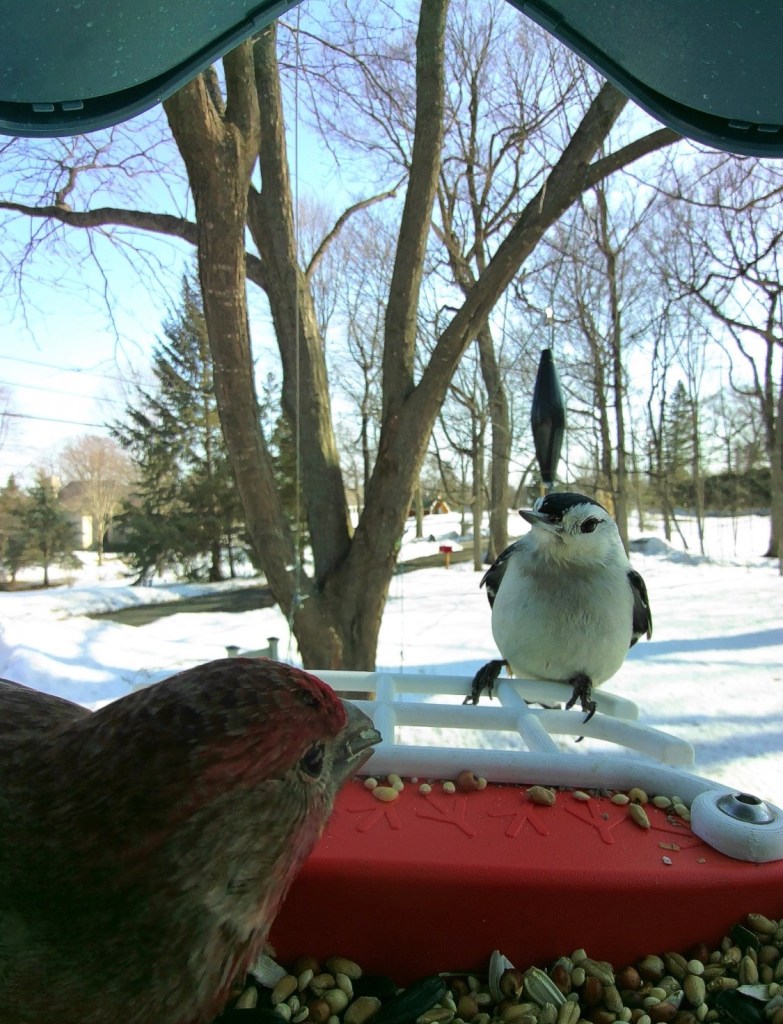
Setting all tech aspects aside, the feeder itself is incredibly durable. Over the winter, we came home one day to discover it had fallen about six feet into dense snow and ice after strong winds. Two parts of the feeder (the orange landing part and the clear camera chassie) snapped out of place, but were easy to put back in. No parts of it broke, proving just how sturdy it seems to be.
One specific hardware feature that I have found to be useful is the solar roof on the feeder. This is an optional add-on when purchasing the Bird Buddy, and it seems to be worth it for the long-term. The panel charges the camera and extends its battery life significantly, sometimes for a couple of weeks on end. Without the panel plugged in, the battery life is much shorter, meaning it has to be charged indoors more frequently.
Whether it be for a deeper look at the natural world, or just pure curiosity, the Bird Buddy is truly one of the best tools to learn about our planet. While it’s still in the early days of development, this feeder has already proven itself to a world of thinkers and learners, allowing for a path to a healthier planet. I have loved this company since the moment I saw it on Kickstarter, and will continue to cherish every bit of joy it gives me.
How can you help your community learn about the local natural environment? Where can you get involved with environmental education? How can this be applied to all communities across the world?
 GLOBR
GLOBR 